Best No KYC Crypto Trading App List for Beginners

Crypto trading has moved beyond flashy websites and race-to-the-bottom fees. On mobile, those things matter even less. When you’re trading from a phone, especially during volatile markets, what really counts is access: how quickly you can open positions, manage risk, and withdraw funds when conditions turn chaotic.
As global regulations tighten, more traders are turning to no-KYC mobile crypto trading apps that don’t make identity verification a single point of failure. Some prioritize full self-custody and control, while others accept centralized custody in exchange for speed, advanced tools, or insurance. The common thread isn’t ideology, but practicality: can you still move your money when it matters most?
After testing multiple no-KYC trading apps and reviewing real user feedback from mobile traders, a few platforms consistently stand out. None are perfect. Each comes with trade-offs. But together, they represent the most relevant no-KYC crypto trading apps you can actually use on mobile today.
ApeX Omni – The Most Decentralized Privacy Option
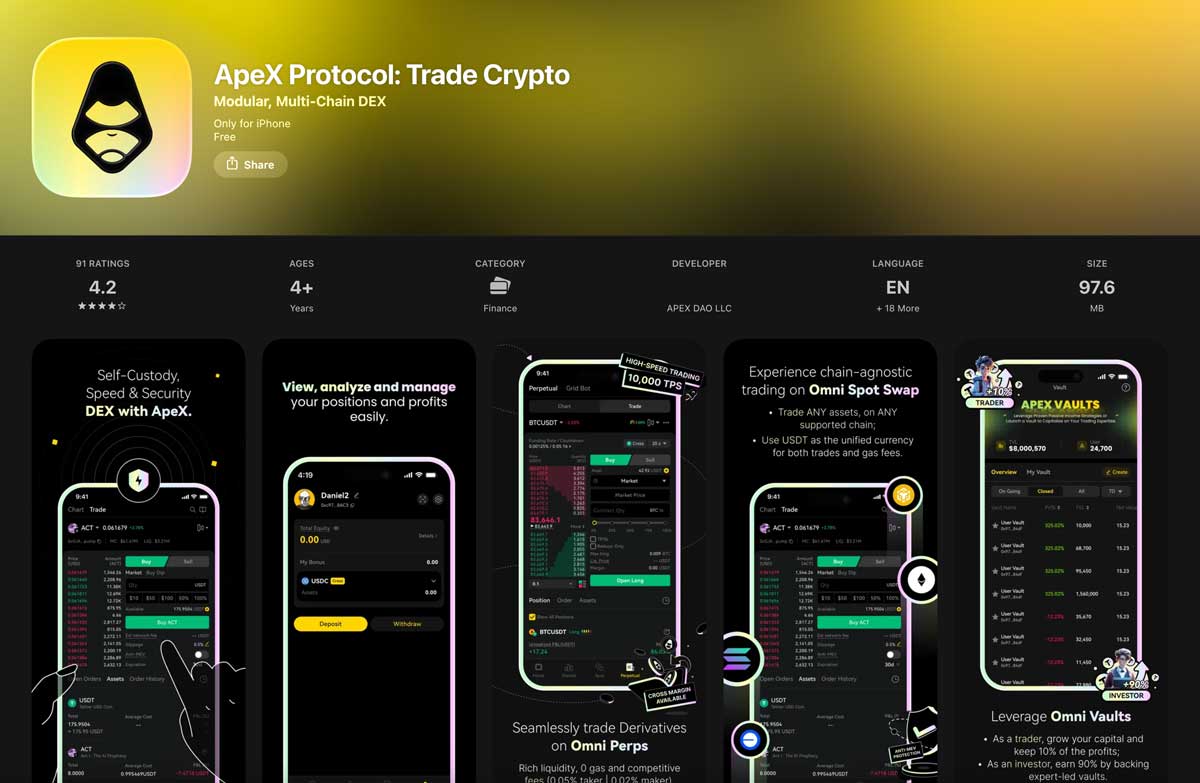
If you’ve been around long enough, you know fees aren’t the real risk. Custody is. When markets get messy, the question isn’t how cheap is this platform, but can I still trade and withdraw when everyone else is panicking.
That’s where ApeX Omni is different from most no-KYC apps.
There is no account here. No balances held by the platform. You don’t deposit funds and hope nothing changes. You connect your wallet and trade directly. Your funds stay under your control the entire time. No withdrawal limits. No compliance rules that suddenly tighten. If the protocol is live, you can trade.
This is why ApeX Omni sits in a different category than centralized no-KYC exchanges. With a CEX, even without KYC, you’re still trusting a company. With ApeX Omni, the rules are fixed in code. There’s nothing to “turn off” when volatility spikes.
Now, the nice part is that it doesn’t feel like a typical DEX. You’re not constantly bridging or signing transactions for every action. ApeX Omni pulls liquidity from multiple chains like Ethereum, Arbitrum, and Solana into one place. Execution is fast. On mobile, it actually feels closer to a centralized exchange than you’d expect.
Fees are straightforward. Maker fees are 0%, and taker fees sit between 0.02% and 0.05%. That’s competitive even for active traders. You can also trade tokenized stocks like Tesla or Apple using USDT, which is useful if you want exposure without moving funds elsewhere.
There’s also a more passive option: Apex Omni Vaults. You earn yield by taking the other side of liquidations. Returns can be high when markets are volatile, lower when things are quiet. It’s not risk-free, but it’s transparent and fully on-chain, so you always know what you’re exposed to.
The downside is the same downside as any real self-custody setup. If you lose your wallet keys, no one can help you. That’s not a bug. That’s the trade-off. ApeX Omni is built for traders who are comfortable being their own bank.
If ApeX Omni fits your style, you can use the WhalePortal link to trade with a 5% discount on fees. It doesn’t change how the platform works. It just saves you money over time.
BloFin
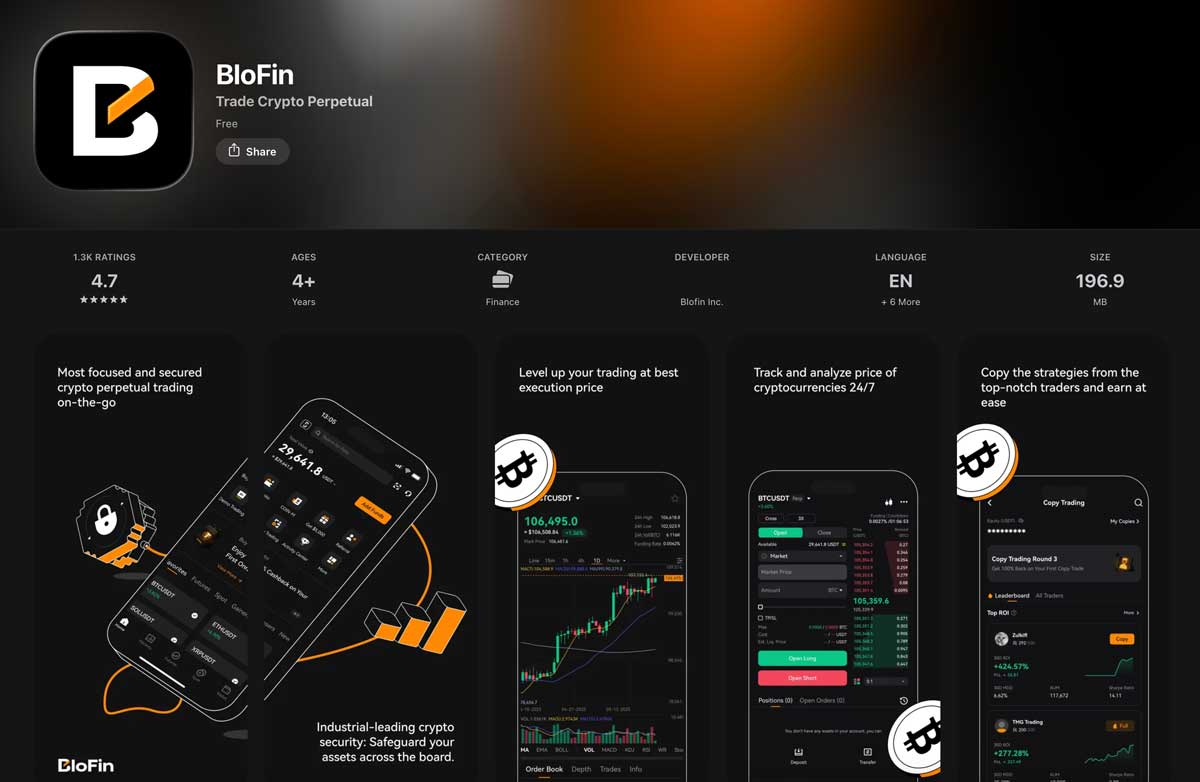
BloFin is for traders who want a proper exchange experience on mobile, but don’t want to hand over a passport just to trade size. If you’re used to platforms like Binance or Bybit, BloFin will feel familiar within minutes.
This is a centralized exchange, so you are trusting the platform with your funds. The upside is that everything works smoothly. Order execution is fast, the app is stable, and the interface is built for active traders, not casual buyers. BloFin has been around since 2019, which matters in this industry, and it shows in how polished the platform feels.
One of the strongest features is the Unified Trading Account. Instead of splitting funds across wallets or positions, your entire balance can be used as collateral across more than 350 derivative markets. This makes it much easier to hedge, scale in and out, or run both long and short positions on the same asset without constantly moving funds around.
From a security standpoint, BloFin uses Fireblocks for custody and backs this up with third-party insurance, which is rare among no-KYC exchanges. For traders who keep funds on a centralized platform, that extra layer does make a difference psychologically, especially during volatile periods.
Fees are straightforward and competitive for a CEX: 0.02% maker and 0.06% taker. Not the cheapest on this list, but fair for what you get in terms of tooling, liquidity, and stability. This is the kind of platform high-volume traders tend to stick with once they’re comfortable.
On mobile, BloFin scores well with users. The app holds 4+ star ratings on both Google Play and the App Store, which lines up with real-world use: charts load fast, order placement is clean, and the app doesn’t fall apart during high volatility.
The trade-off is simple and honest. BloFin is centralized. You gain speed, advanced tools, and insurance, but you give up self-custody. For many active traders, that’s a conscious and acceptable decision.
If you want a deeper breakdown of features, limits, and risk considerations, our BloFin exchange review goes into everything in detail.
Join BLoFin with our unique affiliate link to get up to $5,000 in deposit bonuses
Bitunix
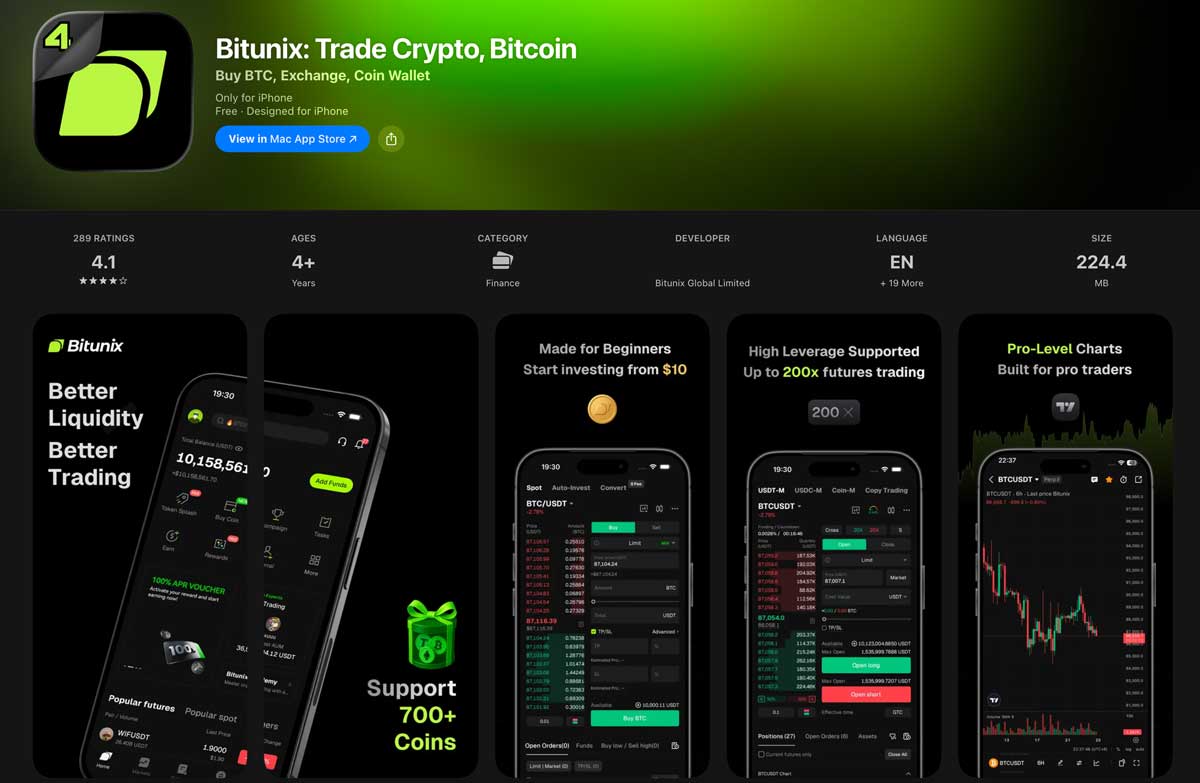
Bitunix is the kind of exchange that traders use when they want early access to coins, not long explanations. If your main goal is catching trending altcoins before they show up everywhere else, this is where Bitunix stands out.
New listings appear fast. That’s the core appeal. You don’t come here for philosophy or perfect decentralization. You come here because when something starts moving, Bitunix often has it tradable before bigger platforms react. KYC is optional for most users, which keeps onboarding simple and withdrawals flexible.
The mobile app is lighter than you’d expect for an exchange with this many markets. There are 1,000+ trading pairs, yet performance stays smooth, even on older phones. Charts load quickly, and you can run multiple chart windows at once. You can pull up as many as 16 charts to track a whole sector, which is genuinely useful if you trade rotations instead of single pairs.
Fees are reasonable and competitive. Spot trading sits at 0.08% maker and 0.10% taker, while futures start at 0.02% maker and 0.06% taker. From time to time, Bitunix runs zero-fee promotions, which active traders can take advantage of. The bigger draw for many users, though, is the non-KYC withdrawal limit, which goes up to $500,000 per day. That gives a lot of flexibility compared to most centralized platforms.
Bitunix also leans into gamification more than the other apps on this list. There’s a Mystery Box system that rewards users for deposits or simple actions, and Copy Trading for those who want exposure without actively managing every position. These features aren’t for everyone, but some traders enjoy the added incentives.
The platform regularly runs large campaigns as well. Right now, Bitunix is marking its anniversary with the Ultra 4ward event, featuring a multi-million USDT prize pool and rewards like Tesla cars and physical gold for active participants. You can ignore these entirely if you want, but for high-volume traders, they can add extra upside.
The trade-off is clear. Bitunix is centralized, and it’s designed for speed and listings, not long-term custody. Most traders use it as a trading venue, not a vault. In that role, it does its job well.
BTCC
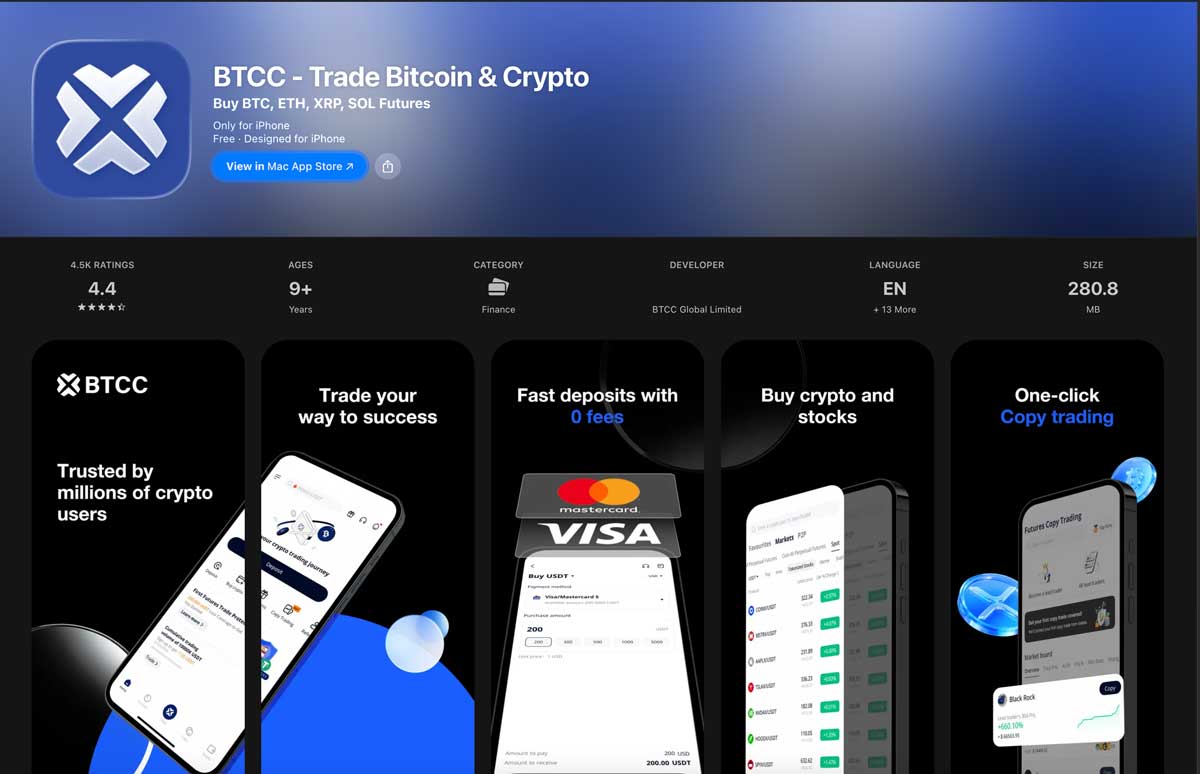
BTCC is one of those exchanges that doesn’t try to impress you. It just works. It’s been around since 2011, which already puts it in a different category than most platforms. It has survived multiple market crashes, regulatory cycles, and exchange blowups, all without a major security incident. That kind of track record matters.
This is a centralized exchange, but it’s clearly built for derivatives traders. The app is clean, fast, and simple. No clutter, no unnecessary features. If you like knowing exactly where everything is, BTCC feels comfortable very quickly.
One standout feature is the demo account. You get 100,000 USDT in paper funds to test strategies, practice entries, or try high leverage without risking real money. That’s genuinely useful, especially if you’re experimenting with new setups or scalping styles.
BTCC supports 300+ trading pairs, including crypto, tokenized gold and silver, and stocks like Tesla and Nvidia. Everything is margined in USDT, which keeps things straightforward. Leverage goes up to 500× on BTC and ETH, so this is clearly aimed at experienced traders who know how to manage risk. Used carefully, it’s flexible. Used carelessly, it will wipe you fast.
Fees are on the higher side compared to some other platforms, with average futures taker fees around 0.045%. That said, BTCC runs a VIP loyalty program that gives trading coupons and fee discounts. For high-volume traders, those discounts can reduce fees significantly, sometimes close to zero.
Like many centralized exchanges, BTCC also runs trading competitions. Right now, there’s a $10M New Year Trading Festival, with a large futures prize pool and physical rewards like gold bars for top performers. You can ignore these if you want, but active traders sometimes use them to squeeze extra value out of volume they’re already trading.
The bottom line is simple. BTCC is not about self-custody or early altcoin listings. It’s about stability, simplicity, and derivatives trading. Many traders use it as a reliable execution venue, not a place to store long-term funds.
If you want a deeper breakdown of limits, fees, and features, our BTCC review covers everything in detail.
A Quick Comparison
|
Feature |
ApeX Omni |
BloFin |
Bitunix |
BTCC |
|
KYC Type |
None (Decentralized) |
Optional (Tiered) |
Optional (Tiered) |
Optional (Tiered) |
|
Max Leverage |
50x |
100x |
125x |
500x |
|
Mobile Wallet |
Third-Party (MM/TW) |
Internal (Custodial) |
Internal (Custodial) |
Internal (Custodial) |
|
Unique Asset |
ZK-Rollup Tech |
Copy Trading |
500+ Altcoins |
Tokenized Stocks |
|
Daily Limit (No KYC) |
Unlimited |
$20,000 USD |
$500,000 USD |
~0.06 BTC |
Summing Up
There’s no single “best” no-KYC crypto trading app. It really comes down to how you trade and how much control you want.
If full control is your priority, ApeX Omni stands out. You trade directly from your wallet, keep custody of your funds, and don’t have to worry about withdrawals being paused or rules changing mid-cycle.
If you’re an active or professional trader who values advanced tools, deep liquidity, and a polished mobile interface, BloFin makes the most sense. You give up self-custody, but in return you get speed, unified margin, and insurance-backed infrastructure.
For traders who focus on altcoins and fast-moving markets, Bitunix is hard to beat. New listings arrive quickly, withdrawal limits are generous without KYC, and the app stays responsive even when you’re tracking multiple markets at once.
And if your priority is stability and derivatives trading, BTCC remains a solid option. Its long track record, simple interface, and high leverage make it a reliable execution venue, especially for experienced futures traders.
No matter which platform you use, one rule never changes: not your keys, not your coins. No-KYC centralized exchanges are great for trading, but long-term profits are best moved to a wallet you control.
Related Articles:
- How to Trade Anonymously (Legally) in Crypto
- Best No-KYC Crypto Exchanges with Low Fees (2025 Guide)
- Decentralized Exchanges Explained: Which DEX Is the Best?