How to check if a crypto exchange is legit (DEX & CEX Safety Checklist)
Crypto is well known for many scams, and even experienced people can fall for it. Nowadays it is also very easy to create a good looking websites that gives the impression of a well-established business. New exchanges are launching at a rapid pace, especially with the growing shift toward decentralized trading platforms. In this article, I’ll show you how to do a relatively quick check to check if an exchange is legit.
Quick 5-minute legitimacy check
Before creating an account on any exchange, always make sure you quickly screen the exchange using the following methods.
CoinMarketCap and Coingecko
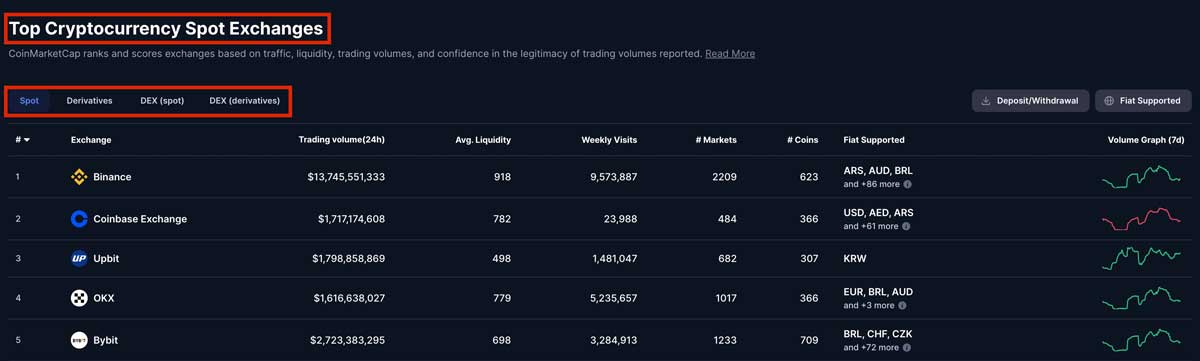
Any exchange that you consider using should have an account on Coinmarketcap and on Coingecko. These are the biggest crypto data websites that track exchange data like volume, trading pairs and even exchange assets. If an exchange you visit does not have an account on any of these websites, it’s best to avoid this exchange.Being listed on CoinMarketCap and/or CoinGecko is a basic prerequisite for even minimal safety.
Trustpilot
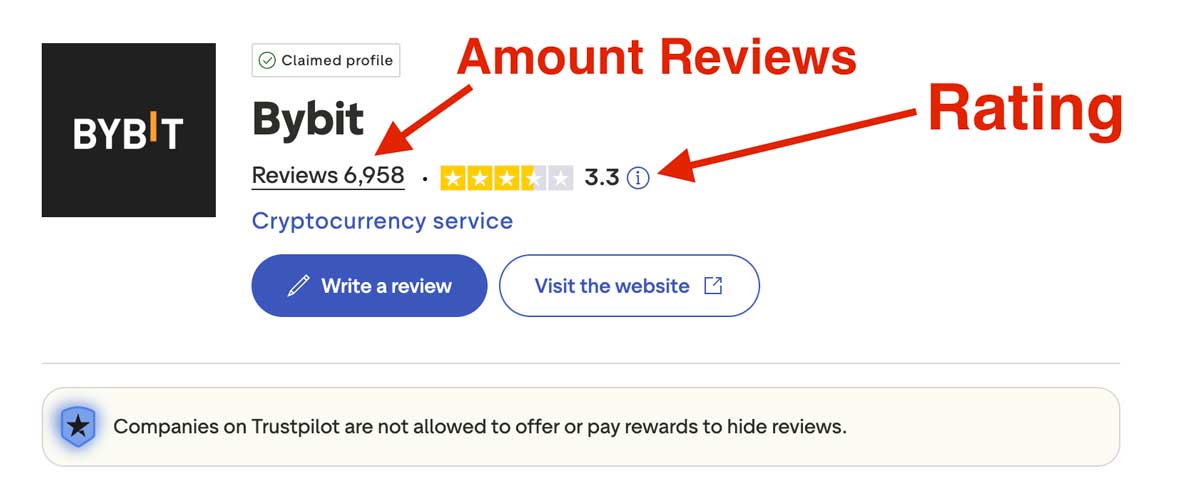
When users experience problems with an exchange, there is a good chance they will share their experience on Trustpilot. Therefore, it is always wise to check the Trustpilot reviews of an exchange, especially the content of the reviews, not just the rating.
Keep in mind that ratings on Trustpilot are often skewed toward the negative. Satisfied users rarely feel the urge to leave a review, while users with bad experiences are much more likely to do so. For this reason, low ratings alone do not necessarily mean an exchange is unsafe.
Instead, carefully read what users are actually writing. Pay attention to how clearly they explain the issue, whether the problem is recurring, and whether it is something you can realistically avoid (such as user error, poor security practices, or misunderstandings).
To add some nuance: I have seen extremely negative reviews of MetaMask where users claim they lost their funds. While this may be true in some cases, it is often the result of users connecting their wallet to a malicious website rather than a flaw in MetaMask itself. By reading the details of the complaints, you can often identify where the real issue lies.
Twitter / X Account
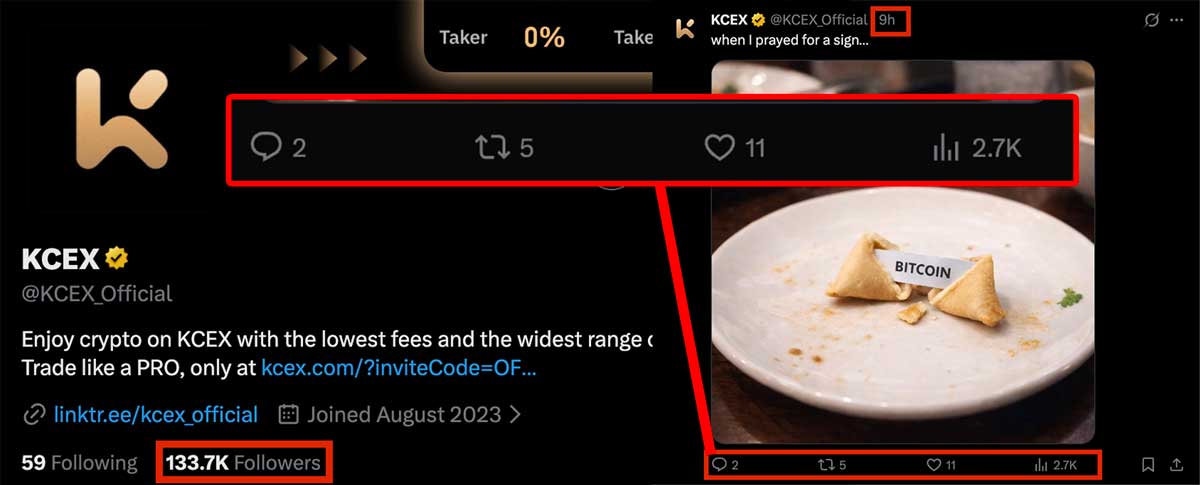
It’s always a good idea to check the X (Twitter) page of an exchange. Many crypto projects buy followers, which can make an exchange appear far more popular than it actually is. However, when you look closely at their posts and engagement, the numbers are often out of proportion to the follower count.
Instead of focusing on followers alone, pay attention to engagement metrics such as likes, replies, and reposts, and read the comments to see whether they appear genuine or AI-generated.
Additionally, traders who experience issues often post about them on X and tag the exchange in an attempt to get support. This can give you a broader and more real-time perspective on user experiences, complementing what you find on platforms like Trustpilot and helping you understand what’s really going on with the exchange.
Deeper Exchange Safety Checks
Once the exchange comes through, the first checks, we’re going to dive a bit deeper into the screening. You are thinking of trusting your cryptocurrency with a third-party so you should do your due diligence to minimise any risk. Luckily, there are some more ways to check the credibility of an exchange, and most traders overlook these metrics.
Backlinks
Backlinks are a very good way to check the credibility of an exchange. Backlinks basically show how many and which websites are talking about the exchange. If a lot of credible sources mention a specific exchange, it lowers the risk of it being a scam, because multiple platforms have researched it and attached their own reputation to it.
Some of these backlinks may be sponsored by the exchange itself, and that does not necessarily have to be a bad sign. In fact, it can show that the exchange is willing to invest in its long-term reputation. Scams are usually not focused on long-term establishment and are generally unwilling to invest capital into marketing, as their mindset is short-term rather than sustainable.
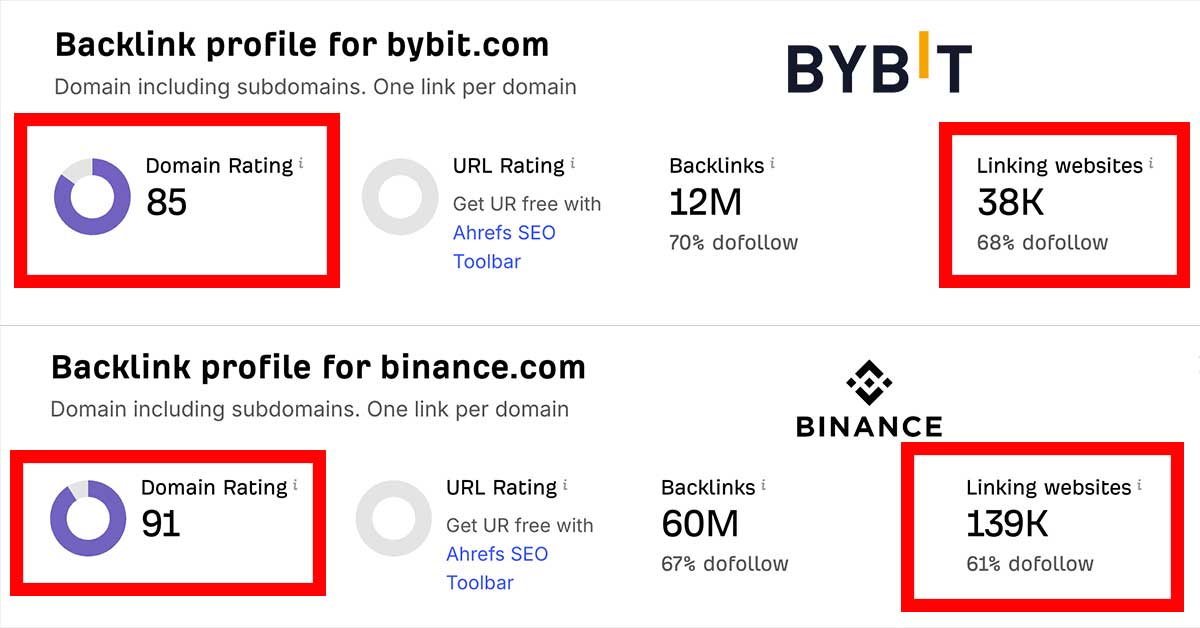
Let’s have a look at the backlink profile of Bybit and Binance for example. The domain rating of both of these websites is pretty high, and you can see that 38K websites mentioned Bybit, while 138K websites mentioned Binance.
Now let’s look at another example. When I ranked exchanges on CoinMarketCap by volume, I noticed something very interesting. An exchange called BTDUEX appeared in second place, right after Binance.

The first major red flag is that its reserve data is not tracked. This means the exchange is not audited by CoinMarketCap to verify whether its reserves actually match user deposits.
When we then look at the backlink profile, we can see that the domain has a domain rating of 11 and only 106 websites linking to it. For a platform that reportedly has over $6 billion in trading volume in the past 24 hours, these numbers simply do not add up.
I personally don’t know this exchange, but based on these metrics alone, I would not feel comfortable trusting my money to this platform.
Team Transparency
Usually when you use a business you want to know who you are dealing with. With crypto it is pretty rare to see for example the team behind an exchange. This has probably multiple reasons, one of them being for the safety of the exchange workers and reducing the risk of social hacks and remain private. So when yo can’t find a team behind an exchange, it’s usually not directly a red flag, the other metrics weigh heavier. But the bigger exchanges like Coinbase, Bybit and Binance do have a face and public CEO. This definitely creates more credibility and trust.
Audits (Reserves tracked)
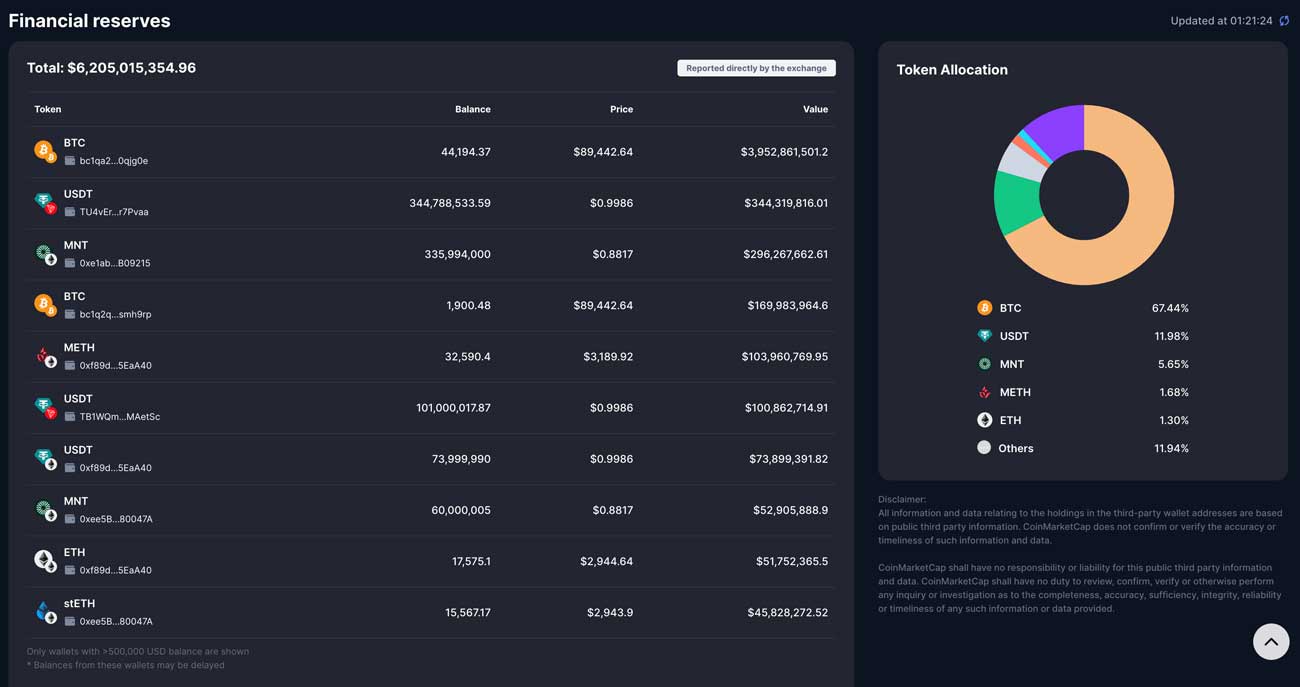
We just mentioned this in the example above, but exchange reserves are often tracked. This mainly started after the collapse of FTX in 2022. As trust in centralized exchanges declined, systems were introduced to verify exchange reserves, allowing users to see whether client deposits are actually backed by real crypto.
You can usually find these audits on the exchange’s main page. They are performed by third parties, so they should not be seen as a guarantee, but rather as a trust signal. If a centralized exchange has no reserve audit at all, this should be considered a red flag.
On decentralized exchanges, audits work differently. Instead of reserve audits, DEXs are typically audited at the smart contract level. These audits review the code to identify vulnerabilities, backdoors, or potential exploits. While this still doesn’t guarantee complete safety, the absence of a smart contract audit on a DEX is also a major warning sign.
DEX vs CEX Risks
Centralized exchanges (CEXs) and decentralized exchanges (DEXs) come with different types of risks. With CEXs, the main risk is custody: you rely on the exchange to securely hold user funds and manage reserves properly. If reserves are mismanaged, frozen, or hacked, users may lose access to their assets.
DEXs reduce custodial risk because users keep control of their own funds. However, DEXs introduce other risks, such as smart contract vulnerabilities, protocol exploits, and lower liquidity on certain trading pairs. This is why smart contract audits and a proven track record are especially important when using decentralized platforms.
If you want to understand these risks in more detail and see which decentralized platforms have proven themselves over time, you can read our in-depth guide on the best decentralized exchanges, where we compare security, audits, liquidity, and usability. The methods discussed in this article apply to both centralized and decentralized exchanges and are a practical way to do your own research when assessing an exchange’s credibility.
Quick Check: Is The Exchange Safe?
If an exchange triggers multiple points below, it’s best to stay away:
- Not listed on CoinMarketCap or CoinGecko
A legitimate exchange should be tracked by at least one major data aggregator. - No reserve audit (for CEXs)
If a centralized exchange does not provide proof of reserves or tracked audits, this is a serious warning sign. - No smart contract audit (for DEXs)
A decentralized exchange without audited smart contracts exposes users to unnecessary technical risk. - Suspicious trading volume
Reported volume that does not match backlinks, brand presence, or overall visibility often indicates fake or inflated data. - Weak or unnatural backlink profile
Very low domain authority and few mentions from credible websites do not align with a supposedly large exchange. - Poor or concerning user feedback
Repeated complaints about withdrawals, frozen accounts, or lost funds, especially when clearly explained, should not be ignored. - Fake social presence
Large follower counts with very low engagement, generic comments, or AI-generated replies are common signs of artificial growth.
Conclusion
The crypto industry offers many legitimate trading platforms, but it also attracts bad actors. By taking a few minutes to check listings on CoinMarketCap or CoinGecko, review user feedback, analyze backlinks, and verify audits, you can significantly reduce the risk of using an unsafe exchange. No single metric guarantees safety, but combining multiple checks provides a much clearer picture. When in doubt, start small, test withdrawals, and prioritize platforms with transparency and a proven track record.
On Whaleportal, before we share anything about any project or exchange, we go through this process to see the credibility of an exchange and check whether red flags are present.
Frequently Asked Questions (FAQ)
How can I quickly check if a crypto exchange is legit?
You can perform a quick legitimacy check by verifying whether the exchange is listed on CoinMarketCap or CoinGecko, reviewing user feedback on Trustpilot, and checking its activity and engagement on X (Twitter). These steps usually take less than five minutes and can help filter out obvious scams.
Is being listed on CoinMarketCap or CoinGecko enough to trust an exchange?
No, but it is a basic prerequisite. Listing on CoinMarketCap or CoinGecko means the exchange is tracked by major data aggregators, but it does not guarantee safety. You should always combine this with additional checks such as reserve audits, backlinks, and user feedback.
Can crypto exchanges fake trading volume?
Yes. Some exchanges inflate or fake trading volume to appear larger or more liquid than they actually are. This is why it’s important to compare reported volume with other signals such as backlinks, brand recognition, reserve audits, and overall online presence.
Are negative Trustpilot reviews always a red flag?
Not necessarily. Trustpilot reviews are often skewed toward negative experiences because satisfied users are less likely to leave reviews. Instead of focusing on the rating alone, read the actual reviews and look for recurring issues such as withdrawal problems, frozen accounts, or poor customer support.
Why are backlinks important when checking an exchange?
Backlinks show how many and which websites mention an exchange. A strong backlink profile from credible crypto or financial websites suggests that the exchange has been researched and referenced by others. Very low domain authority or few mentions can be a warning sign, especially if the exchange claims high trading volume.
Is it a red flag if an exchange doesn’t show its team?
Not always. Some exchanges choose to keep their teams private for security reasons. However, large and established exchanges often have public leadership, which adds credibility. Team transparency should be considered alongside other factors like audits, backlinks, and user feedback.
Related Articles:
- How to Track Smart Money on Hyperliquid Using Wallet Data (Complete Guide)
- Quantitative Crypto Trading: Strategies, Automation & Backtesting
- Decentralized Exchanges Explained: Which DEX Is the Best?